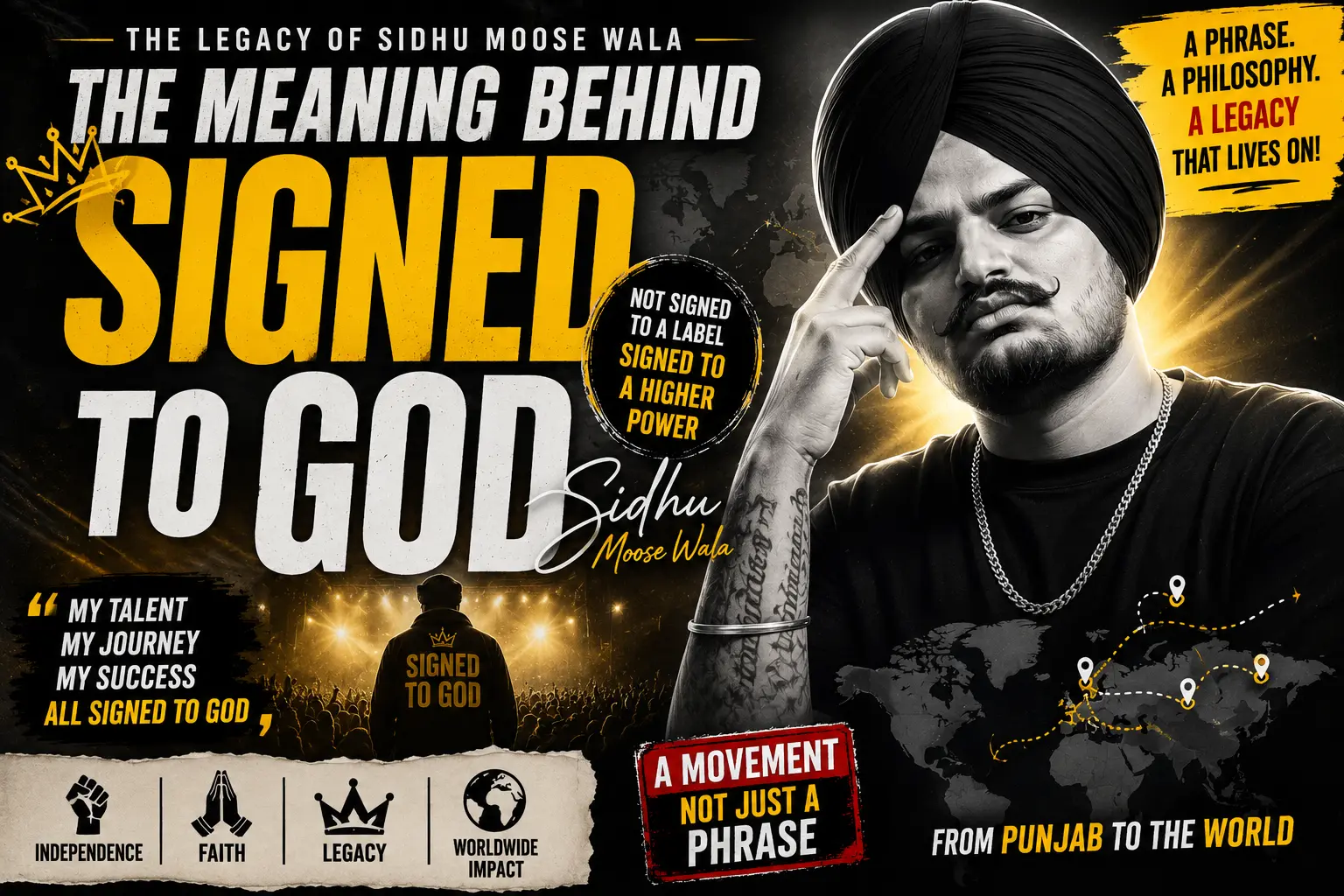
Some phrases in music outlive the artist who coined them. “Signed to God” is one of those rare lines that has transformed from a simple lyric into a cultural movement. For fans of Punjabi music and followers of Sidhu Moose Wala’s journey, this phrase represents far more than wordplay — it’s a philosophy, a statement of independence, and in many ways, a prophecy.
Years after it first appeared in his music, people are still searching for what “Signed to God” truly means, why Sidhu used it, and how it became attached to his world tour branding. This article breaks it all down in detail.
Where Did “Signed to God” Come From?
Before he became one of the biggest names in Punjabi music, Sidhu Moose Wala was known for his sharp lyrics and refusal to follow industry trends blindly. The phrase “Signed to God” emerged from this same spirit of independence. At a time when artists were constantly chasing record label deals, Sidhu flipped the narrative — suggesting that his talent, his journey, and his success weren’t tied to any contract with a label, but rather to something bigger: a higher purpose, destiny, or divine plan.
In interviews and through his music, he often spoke about staying true to his roots and not compromising his art for commercial validation. “Signed to God” became shorthand for that mindset — an artist who answers to a higher calling rather than industry politics.
The Deeper Meaning Behind the Phrase
When you break down “Signed to God,” there are a few layers worth unpacking:
1. Spiritual Ownership of Talent Sidhu often credited his abilities — songwriting, performing, connecting with crowds — as gifts rather than something self-made alone. Saying he was “signed to God” was his way of acknowledging that his success came from something beyond contracts and managers.
2. Rejection of Industry Control The music industry, especially in its early stages for independent Punjabi artists, often meant signing away creative control. By declaring himself “signed to God,” Sidhu was making a statement that no label owned his voice or his message.
3. A Reflection of His Punjabi and Sikh Roots Faith and spirituality run deep in Punjabi culture, and Sidhu frequently wove these themes into his music. The phrase resonates with listeners who see it as an extension of his cultural identity rather than just a clever marketing line.
“Signed to God” and the World Tour Connection
As Sidhu Moose Wala’s popularity grew internationally, the phrase began appearing in the context of his world tour branding. Fans travelling to his shows, sharing tour merchandise, and discussing his global reach often used “Signed to God” as a tagline representing his rise from a small-town Punjab background to international stages.
This is also one of the biggest reasons people search for this phrase today — they’re looking for tour updates, ticket information, merchandise, and tribute content connected to this branding.
Why People Are Still Searching for This Phrase Today
Even after his passing, Sidhu Moose Wala’s influence hasn’t faded — if anything, it has grown stronger. Fans continue to:
- Search for unreleased lyrics and meanings behind his songs
- Look up tribute content and anniversary posts
- Search for merchandise and apparel tied to his branding
- Revisit his philosophy on independence and self-belief
- Connect his words to their own personal journeys
“Signed to God” has become a phrase fans use to express resilience, self-belief, and staying true to one’s path — values that Sidhu consistently represented through his music and public persona.
The Cultural Impact of “Signed to God”
What makes this phrase so enduring is its universal appeal. You don’t need to follow Punjabi music closely to understand its message. It speaks to anyone who has ever felt like an outsider trying to make it on their own terms — without needing approval from gatekeepers.
This is part of why the phrase has crossed over into broader pop culture conversations, inspiring fan art, tattoos, social media captions, and even academic discussions on music and identity in Punjabi hip-hop culture.
Final Thoughts
“Signed to God” isn’t just a line from a song — it’s a worldview. It represents an artist who believed his journey was guided by something greater than fame, money, or industry approval. For millions of fans across the world, the phrase continues to symbolize independence, faith, and the relentless pursuit of staying true to oneself.
As Sidhu Moose Wala’s legacy continues to grow, phrases like “Signed to God” ensure his message lives on — not just in his music, but in the everyday lives of the people who carry his words forward.